Royal Flemish Theater (KVS)


A look behind the scenes at the Brussels City Theater
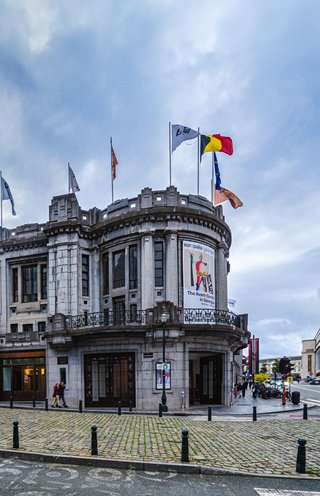
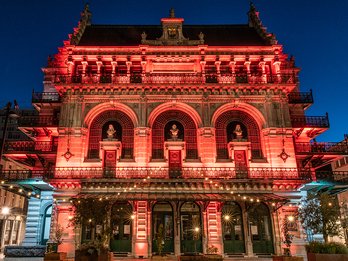
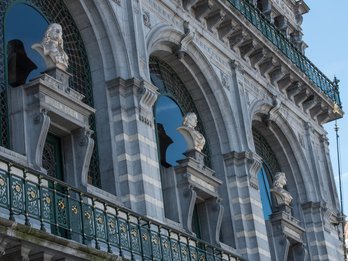
The Royal Flemish Theater is inextricably linked to the development of Brussels as an urban and cultural center. In 1883, architect Jean Baes was commissioned by Mayor Charles Buls to convert an old armory into a modern theater. The building was constructed in Flemish Neo-Renaissance style, with the original façade of the arsenal becoming the rear façade. Striking features include the stepped side walls with external balconies, designed with fire safety and mass evacuation in mind – a progressive intervention for its time.
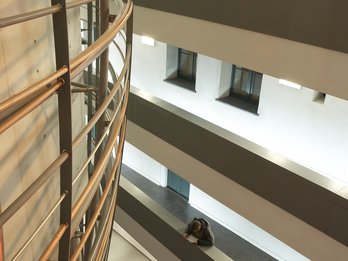
After more than a century of intensive use, the building no longer met the needs of a contemporary theater. In 1999, a thorough renovation and expansion of the Arduinkaai began. Architect Michel Verliefden opted for a distinctive concept: a new volume, De Bol, was placed as a building within the existing building. By completely emptying the old arsenal, a large void was created, into which a stacked structure of concrete cylinders was installed and connected to walkways along the historic walls.
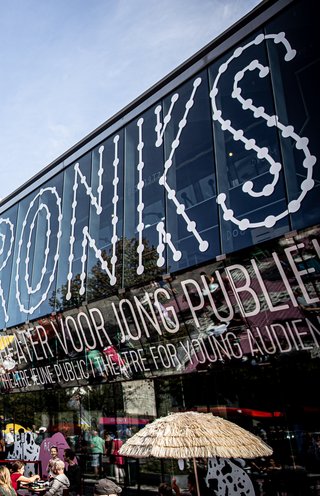
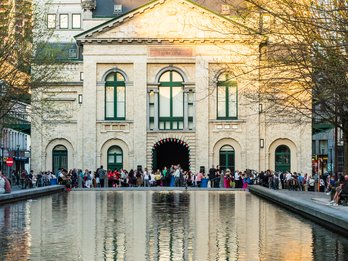
Today, the KVS's architecture reflects its layered theater history and dynamic relationship with the city. The complex comprises three performance spaces, each with its own character and use: De Bol as the heart of the theater, De Top under the glass roof, and De Box in the new volume on Arduinkaai. During this interior tour, we will discover the architectural choices, the theater's operations, and the interaction between KVS and Brussels, based on spaces that normally remain hidden from the public.
Good to know
Sanitary facilities are available in the building.
The building is accessible to persons with limited mobility, provided that an adapted route is used. Please let us know in advance if your group includes participants with limited mobility.
Reservation and guide fee. We are exempt from VAT.