Palace of Justice: the largest courthouse in the world




Symbolism in an imposing monument under construction
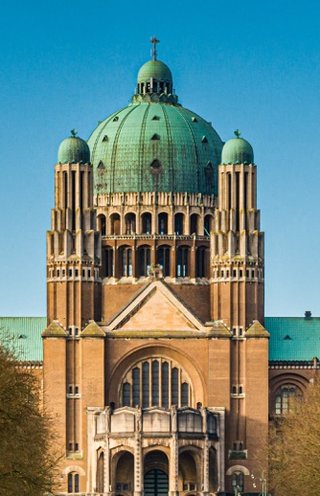
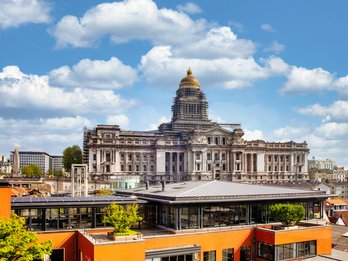
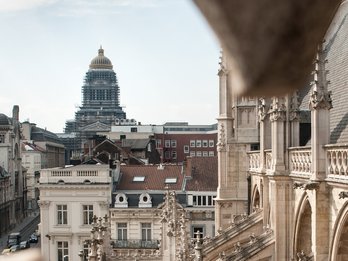
In the 19th century, the Palace of Justice was the largest building constructed in Europe. More than 140 years later, its dome still dominates the Brussels skyline. The man behind it, Joseph Poelaert (1817-1879), was a stubborn jack-of-all-trades who refused to adhere to any fixed style. His unbridled dedication drove him to exhaustion, and he was unable to complete his gigantic design himself. The people of Brussels meaningfully called him the Schieven architect – and that was not a compliment.
The Palace of Justice is a neoclassical monument with striking Assyrian-Babylonian features. Poelaert saw architecture as a moral and almost metaphysical task: proportions, dimensions, and motifs had to make order, justice, and the separation of powers visible. This layered symbolism, nourished by ancient cultures and religious traditions, makes a visit here special. You will discover Poelaert's life, his vision, and the building's place in the city and the justice system. Our guides bring this colossal monument back to life with their stories.
And what exactly is the situation with those scaffolding structures? Many individuals have never seen the building without scaffolding. However, there is hope! The Brussels Region has developed a plan to complete the restoration of the façade by 2030. This timing is ideal to add extra splendor to Belgium's 200th anniversary celebrations.
Good to know
The corridor with the busts, the Assize Court, the Chamber of Solemn Sessions of the Court of Cassation, and the Chamber of Solemn Sessions of the Court of Appeal are closed to the public for restoration.
Please leave sharp objects such as nail clippers, nail files, forks, knives, scissors, pocket knives, etc. at home. When entering the Palace of Justice, you will pass through a security scanner. If sharp objects are found, you will be referred to the internal police for further investigation.
This procedure may be perceived as unpleasant or intimidating and takes extra time, which may cause you to miss part of the tour.
The building has sanitary facilities.
The building is accessible to people with reduced mobility, provided that an adapted route is used. Please let us know in advance if your group includes participants with reduced mobility.
Reservation and guide fee. We are exempt from VAT.