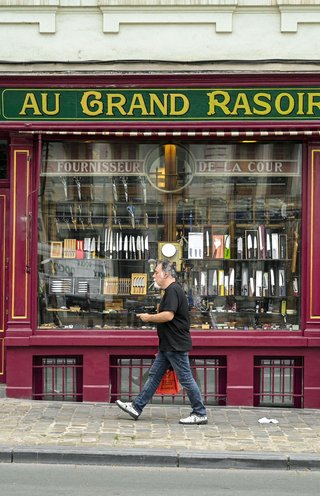
Bank buildings: architecture as a calling card


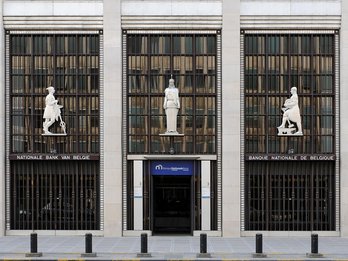
Money in stone and glass
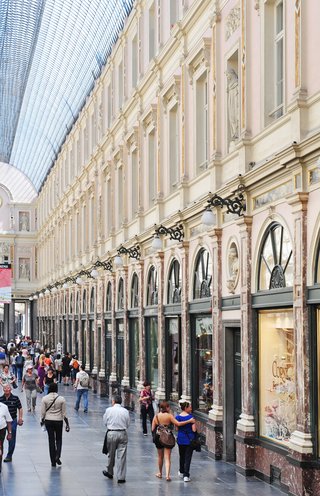
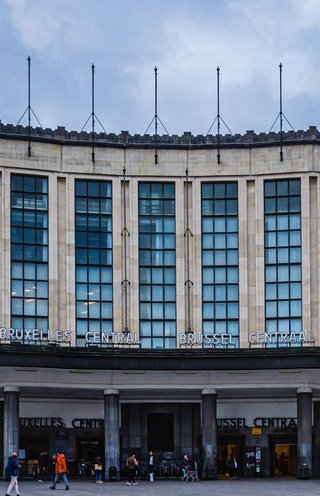
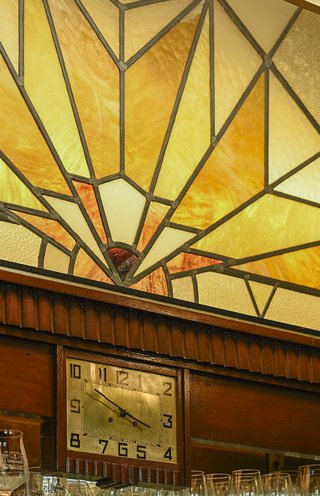
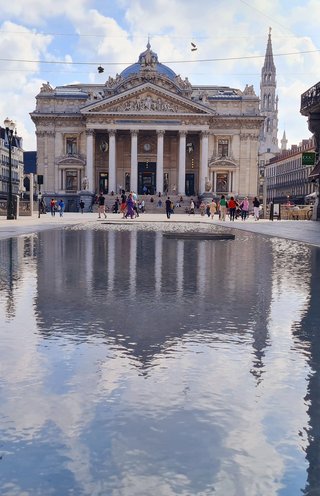
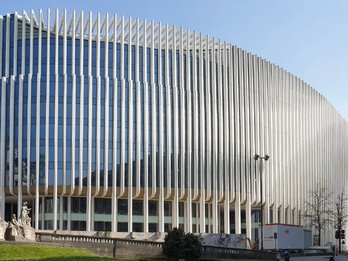
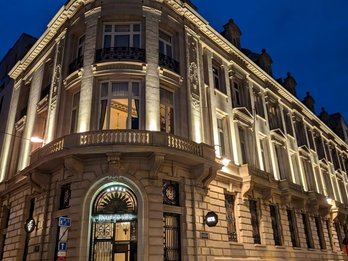
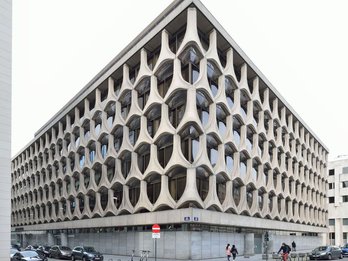
In the center of Brussels, bank architecture tells a story of power, trust, and change. In the 19th century, banks appeared as monumental neoclassical buildings, inspired by temples and palaces, intended to radiate stability and reliability in a young capital city. In the late 19th and early 20th centuries, Art Nouveau and Art Deco followed, with banks seeking to showcase modernity and progress through new materials, rich decoration, and refined craftsmanship. After the Second World War, modernist bank buildings made their appearance: sleek, rational, and efficient, often in concrete and glass, in keeping with an era of growth and internationalization. Today, we see contemporary and postmodern interventions that emphasize transparency, sustainability, and urban integration.
Why banks want to stand out
Banks deliberately choose striking buildings because architecture is a form of communication. A bank building must inspire confidence, demonstrate financial strength, and at the same time be recognizable in the cityscape. Through grandeur, quality of materials, and a prominent location, a bank shows that it is stable and reliable. At the same time, the architecture reflects the spirit of the times: where massive facades used to radiate certainty, recent designs emphasize openness and accessibility, with large windows and publicly accessible spaces. The building thus functions as a calling card, bringing together economic ambitions and social values.
This gives banks a special place in the city. They are often located in strategic locations: near commercial hubs, squares, or symbolic centers of power. Bank buildings are not merely functional offices, but urban landmarks that help shape the character of Brussels. During this walk, we will see how banks use architecture to position themselves between the economy and society, and how their buildings have become part of the city's collective memory.
Good to know
This city walk takes place in an urban environment where obstacles such as cobblestones, narrow sidewalks, and level differences cannot always be avoided. Please do not hesitate to contact us for more information.
This walk takes 1 hour and 30 minutes. Would you like to see more, discover more, hear more stories? Extend your walk by an extra hour and experience what others miss!
This walk is a linear walk with a different end point. Don't want to walk back to the starting point? No problem: there is always a public transport stop nearby. At the start, you can agree on the end point with the guide.
Reservation and guide fee. We are exempt from VAT.