Constant changes at the Tour & Taxis site
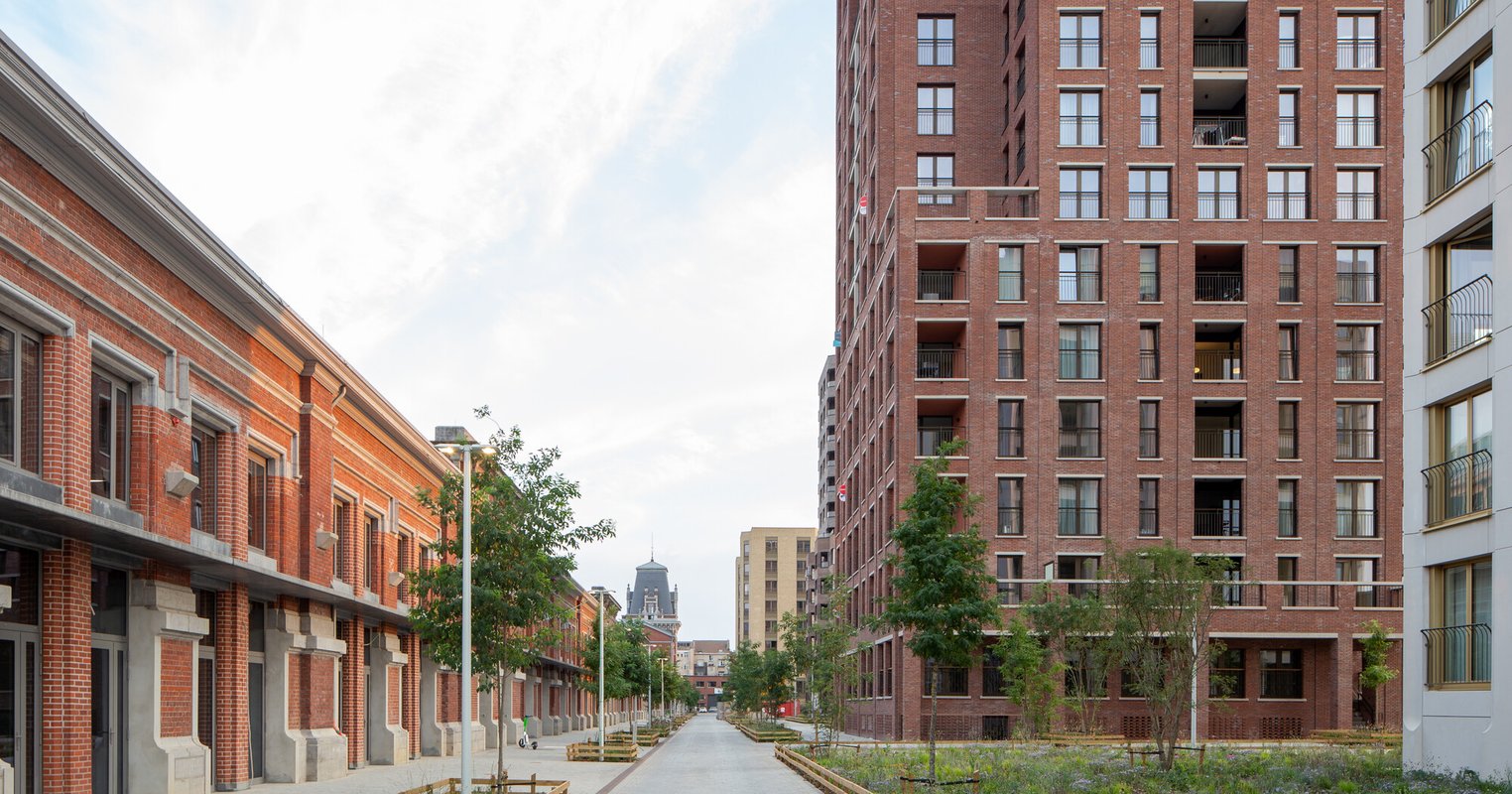
Brussels is not a city of tabula rasa, but of transformation. This is particularly true of Tour & Taxis, a vast former customs and storage area on the canal. After customs operations ceased in 1993, a third phase began, in which existing buildings were systematically reused. Warehouses, the Royal Warehouse, and the former post office building were given new functions, while contemporary architecture was also added. Within this context, Gare Maritime is not a separate project, but the architectural center of gravity of an area undergoing rapid urban development.
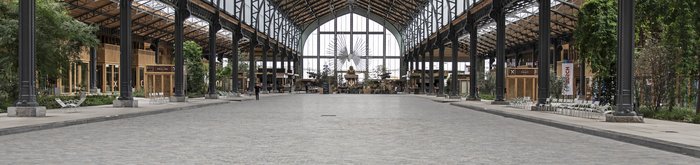
Gare Maritime in Brussels is one of the most impressive architectural repurposing projects of recent years. The monumental hall, built in 1902 as a freight station, measures 140 by 280 meters and consists of seven aisles supported by rows of cast-iron columns. The building once formed the logistical heart of the Tour & Taxis site and is now playing that central role again, albeit with a completely different purpose.
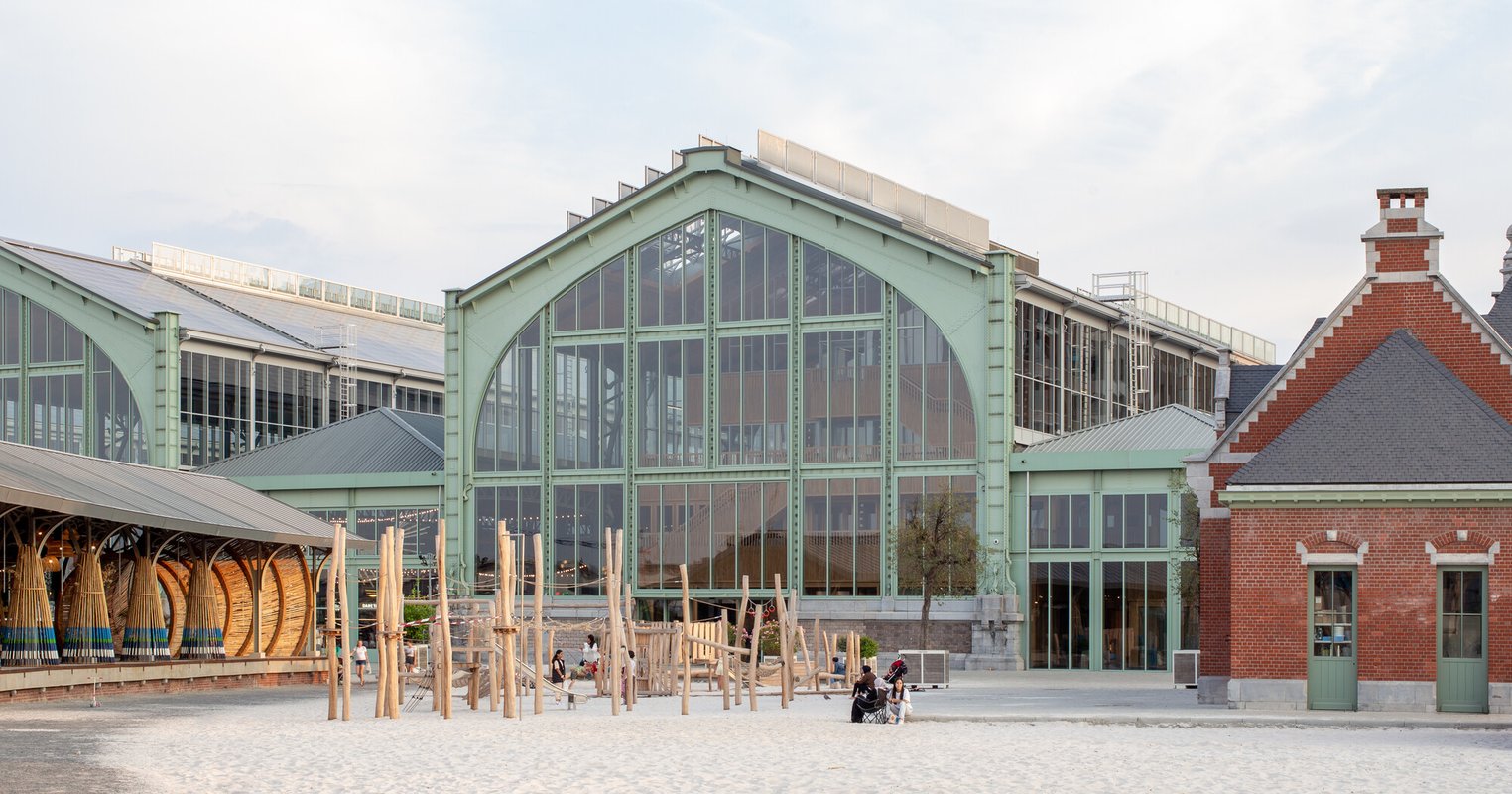
The restoration of the historic hall was carried out by Jan de Moffarts Architects, with great care for the existing materials and decorative structures from the early 20th century. Neutelings Riedijk Architects were responsible for the transformation. Their core idea was not to build the enormous 45,000 m² program of offices, shops, and restaurants against the hall, but to place it inside it. This resulted in twelve freestanding wooden pavilions that utilize the full height of the hall, but leave its spatial character intact.
These pavilions, constructed from cross-laminated timber, have three floors and a mezzanine level. They are arranged in a clear rhythm that ties in with the existing structure of the hall. Between the volumes, a covered public space is created, comparable to an urban boulevard or market square, larger than the Grand Place in Brussels. Stairs, streets, courtyard gardens, and floor mosaics reinforce the feeling of a covered city.

Architecturally, the project is deliberately understated. Ornamentation is not added, but sought in materiality, rhythm, and proportion. The warm wooden facades complement the cleaned historical ceiling and contrast subtly with steel and glass. Sustainability is an integral part of the design: only the pavilions are air-conditioned, with geothermal energy, solar panels, recycled materials, and a demountable construction.
Gare Maritime demonstrates how monumental industrial heritage can not only be preserved, but also given new meaning through a clear architectural strategy that balances old and new.
