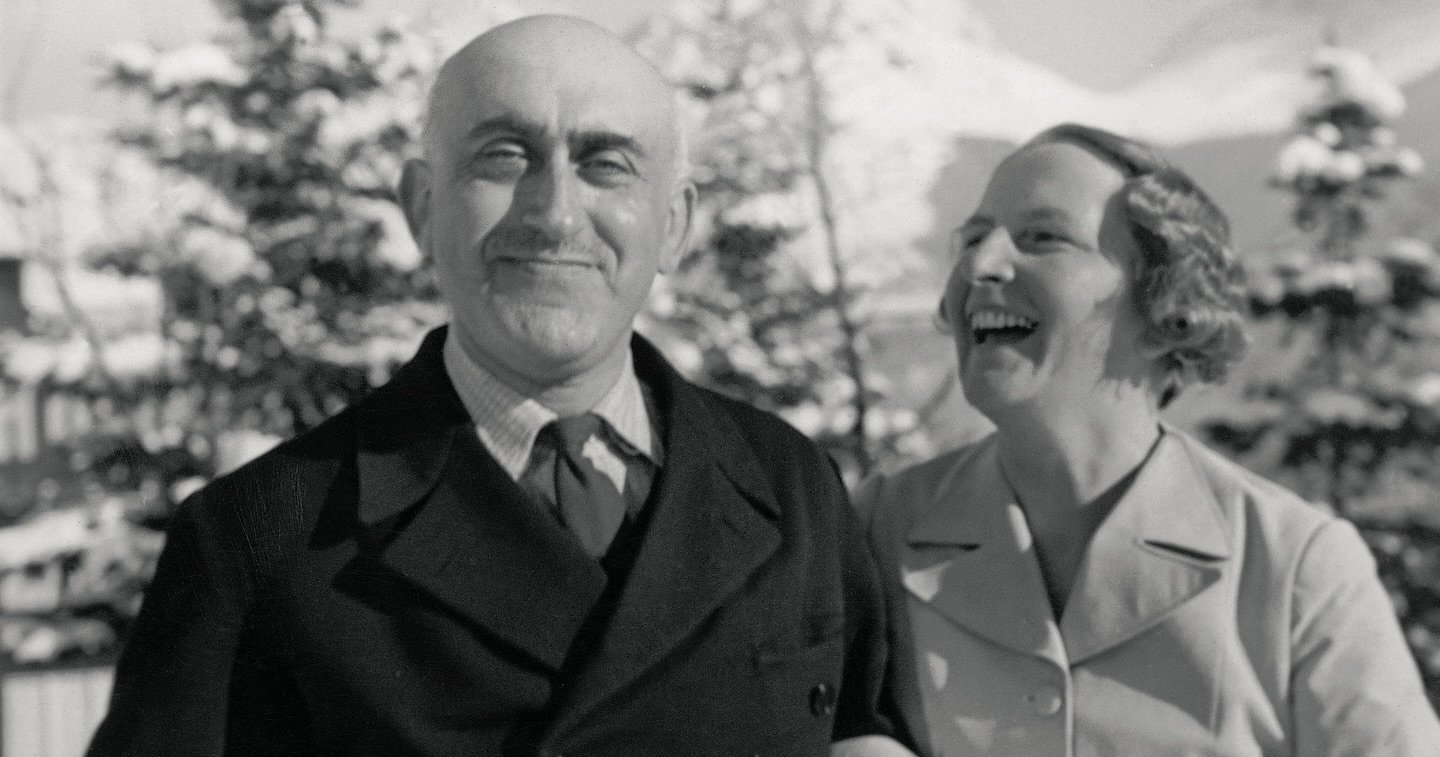
Who were David and Alice van Buuren?
David and Alice van Buuren lived in the first half of the 20th century in a unique cultural bubble of art, architecture, and international connections. David Michel van Buuren (1886–1955), of Dutch descent, was a successful banker who settled in Brussels in 1909. In 1922, he married Alice Piette (1890–1973) from Antwerp, and together they embarked on a lifelong project: collecting, supporting, and exhibiting art, not only as private individuals, but also as patrons with a deep cultural commitment.
Their house, located on Léo Errera Avenue in Uccle, is a textbook example of what is known as a Gesamtkunstwerk — a living environment in which architecture, interior design, and art collection come together to form a single artistic experience. Between 1924 and 1928, the villa was built in the typical Amsterdam School style, while the interior featured an exceptional ensemble of Art Deco designs created by leading Belgian, French, and Dutch interior designers and craftsmen.
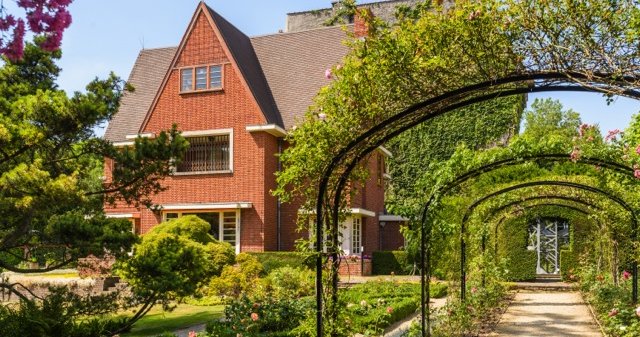
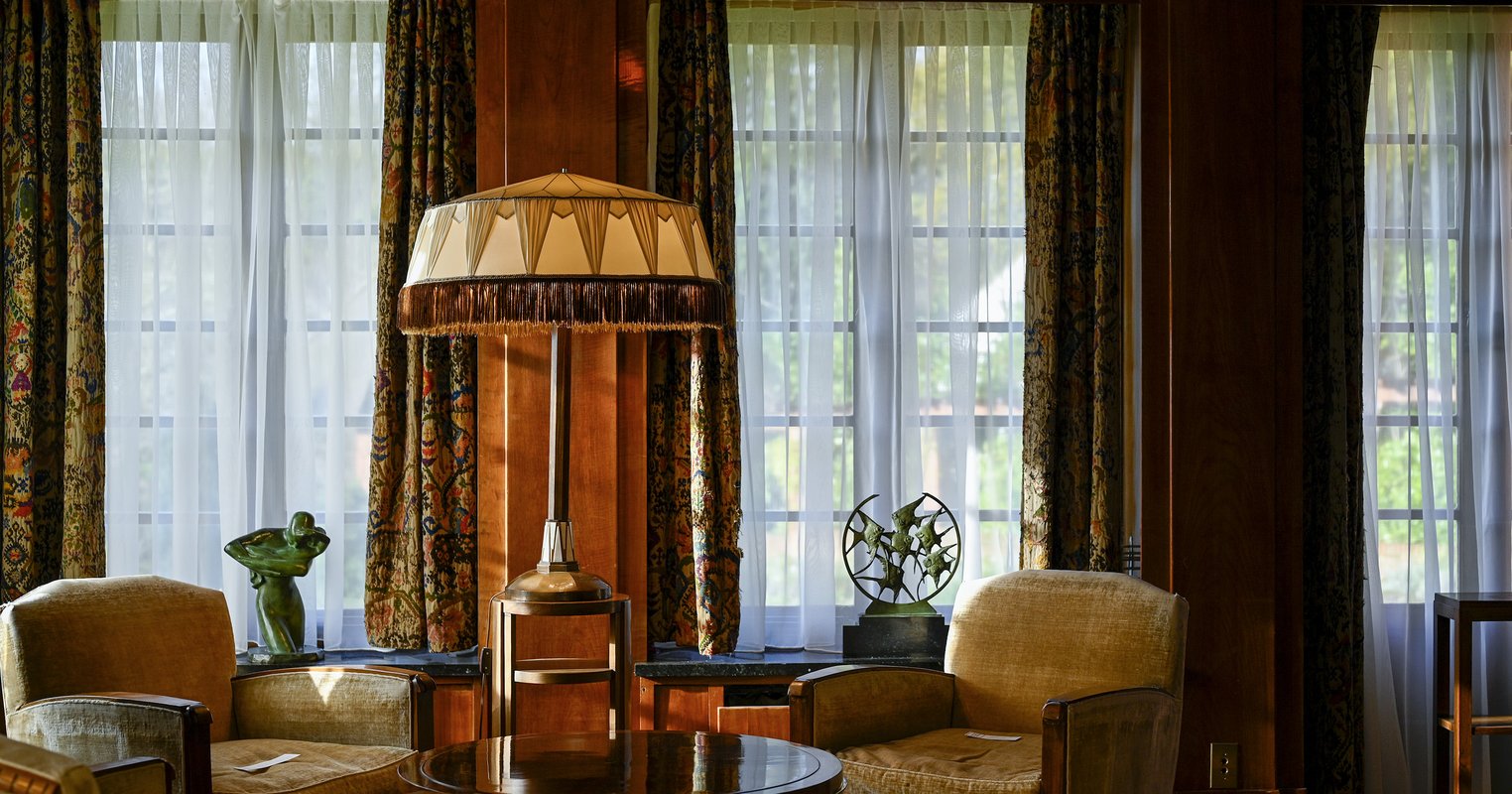
David and Alice actively participated in the design of their home: every detail was carefully chosen to radiate both harmony and aesthetic innovation. David himself participated in the development of architectural motifs that recur throughout the house, and the couple purchased prominent pieces at international exhibitions, such as the Exposition des Arts Décoratifs et Industriels Modernes in Paris (1925), where they purchased, among other things, an impressive chandelier by Dutch designer Jan Eisenloeffel and matching stained-glass windows by Jaap Gidding.
A house as a museum
The interior design of the house reflected their wide-ranging interests: rare furniture, signed carpets, stained glass, sculptures, and paintings by Belgian and international masters remained in their original places. The collection includes works from the 15th to the 20th century, including works by old masters such as Pieter Bruegel the Elder, but also modern artists such as Rik Wouters, James Ensor, Kees van Dongen, Henri Fantin-Latour, Constant Permeke, and Gustave van de Woestijne—of whom David Van Buuren was a devoted patron and who are represented in the collection with no fewer than 32 paintings.
The van Buurens moved in a broad, international social circle. Their home was not a closed private space, but a lively meeting place where artists, thinkers, and cultural icons gathered. Guests such as French painter Raoul Dufy, poet Jacques Prévert, designer René Lalique, and even Russian impresario Sergei Diaghilev visited the villa, as did Belgian surrealist René Magritte. In addition, international politicians such as Golda Meir, Yitzhak Rabin, and Moshe Dayan often found their way to this cultural epicenter — demonstrating the far-reaching nature of their social connections.
The garden
The link between architecture, art, and social interaction continued beyond the walls of the house in the extensive gardens. Originally designed by landscape architect Jules Buyssens and later expanded by René Pechère, this garden forms an artistic, almost theatrical green setting with rose gardens, a maze, and the romantic Jardin du Cœur.
David died in 1955, but Alice continued their shared dream. In 1970, she established a public foundation and drew up her will so that the house, gardens, and art collection would be preserved as a museum and cultural institute. Since 1975, the villa has been open to the public as the Van Buuren Museum & Gardens, a living monument to the art deco world and a tribute to the cultural life that David and Alice van Buuren built.