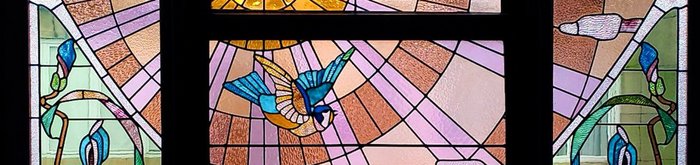
What is the difference between art nouveau and art deco?
Art Nouveau is recognizable by its flowing lines, plant motifs, and strong artisanal character, in which architecture, interior design, and decoration form a unified whole. Art Deco, popular since the 1920s, favors clean geometry, symmetry, and luxurious materials, and exudes modernity, progress, and urban elegance.
Brussels is one of the best cities in the world to understand the difference between Art Nouveau and Art Deco. Both styles leave their mark on the streetscape, but they differ greatly in atmosphere, form, and ideology. If you look closely, you will see not only beautiful buildings, but also two different moments in Brussels' history.
Art Nouveau buildings and guided tours in Brussels
- Tassel Hotel
- Devalck House
- Louiza district
- Along the Northeast Squares
- In Schaerbeek
Art Deco buildings and guided tours in Brussels
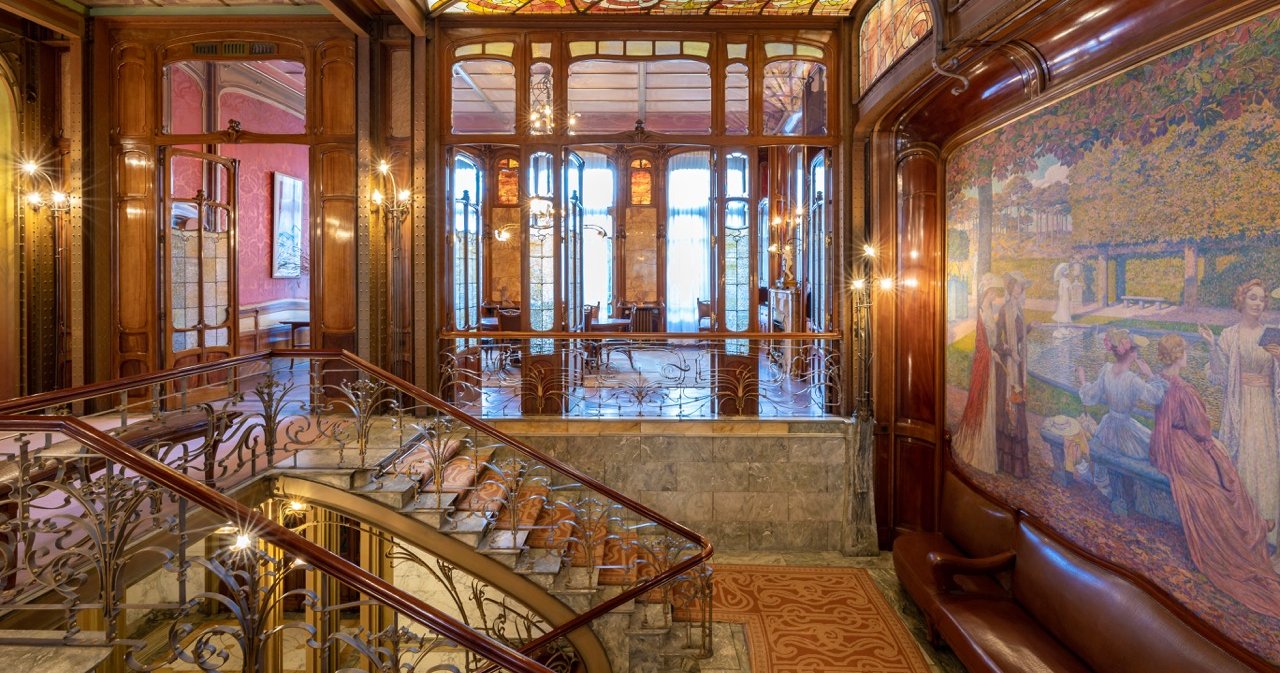
Art Nouveau emerged around 1890 and experienced a real breakthrough in Brussels. The style is recognizable by its flowing lines, asymmetry, and rich decoration, often inspired by plants and flowers. Architects wanted to move away from rigid historical styles and sought a new, modern design language. The absolute starting point of Art Nouveau is Victor Horta's Hôtel Tassel, widely regarded as the first building in this style. It is no coincidence that it is located near Avenue Louise, a neighborhood where the Brussels bourgeoisie wanted to show off their new, progressive identity. The Hôtel Solvay, also by Horta, is another iconic example: a total design in which the façade, interior, furniture, and even door handles form a harmonious whole. The Devalck House follows suit with its refined ornaments and craftsmanship details. Art Nouveau feels personal, almost intimate, and invites you to take your time looking.
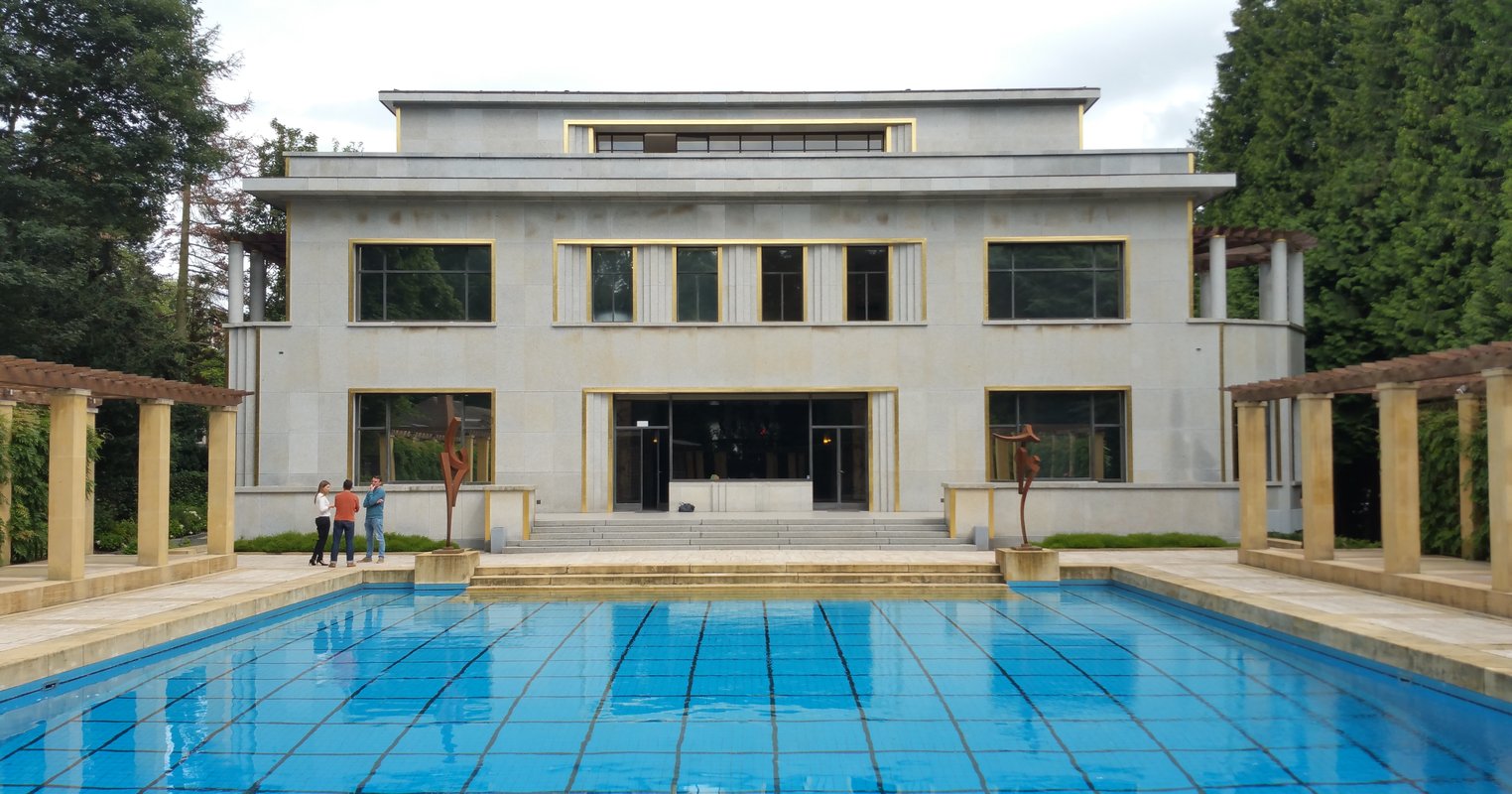
After the First World War, the tone changed. Art Deco became popular, reflecting a world that was becoming faster, more technical, and more international. The style abandoned its sweeping lines in favor of clean forms, geometry, and symmetry. Luxury remained important, but became more controlled and modern. In Brussels, Art Deco is not only found in residential areas, but is also clearly present in the city center. The Villa Empain is a prime example: monumental, perfectly balanced, and constructed from noble materials such as marble and bronze. The Van Buuren Museum, on the other hand, shows how Art Deco can also be warm and homely, with an emphasis on comfort and art. Along Roosevelt Avenue, you can see how the style was applied to larger buildings and avenues, with impressive volumes and a certain grandeur.
In summary, Art Nouveau tells the story of imagination and craftsmanship, while Art Deco stands for order, modernity, and self-confidence. In Brussels, both styles coexist, turning the city into a fascinating backdrop where architecture and history go hand in hand.
